Building a REST API with Python: FastAPI vs Flask
Discover the differences between FastAPI and Flask for building REST APIs in Python. We explore performance, code examples, and when to choose each framework.
Published
18 April 2026
Reading Time
2 min read
Author
Infotact Team
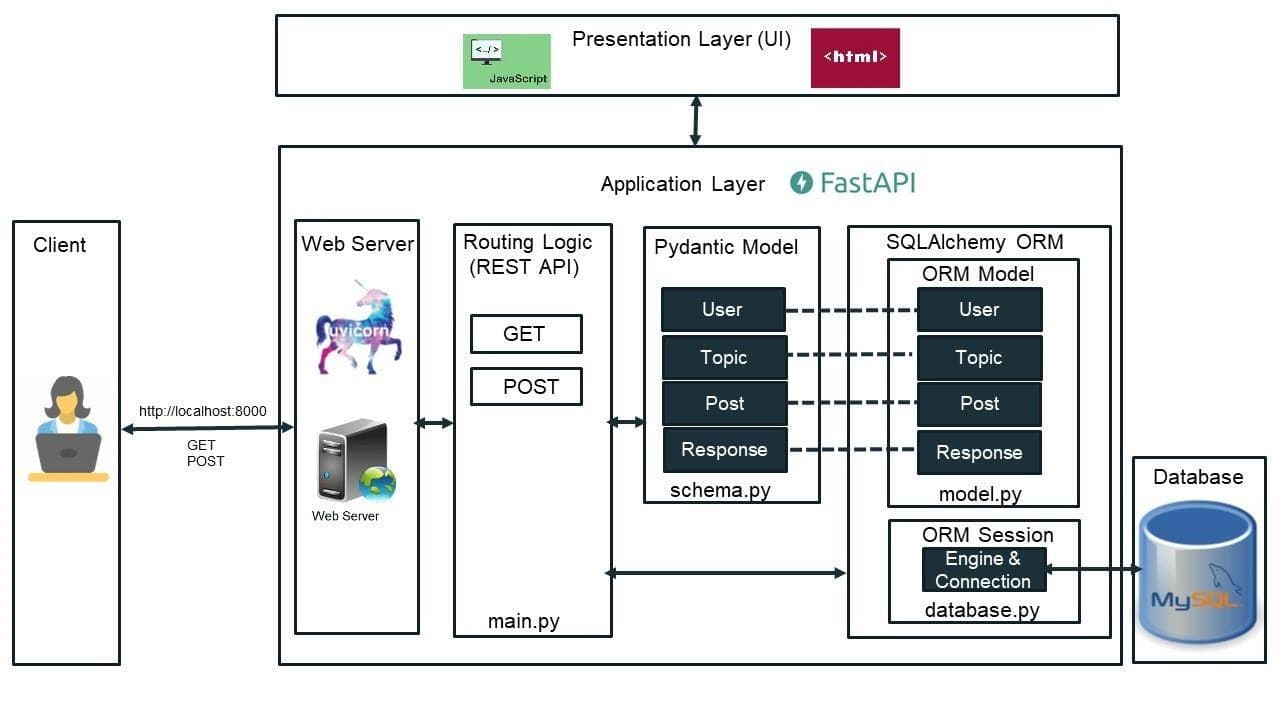
Building a REST API with Python: FastAPI vs Flask
While building a REST API, I faced a tough decision: should I go with FastAPI or Flask? Both frameworks have their strengths and weaknesses, and understanding them is key to making the right choice for your project.
FastAPI vs Flask Comparison
FastAPI and Flask are two popular frameworks for building REST APIs in Python. FastAPI is designed to be high-performance and is built on top of Starlette, while Flask is a lightweight framework that is easy to learn and use.
FastAPI Features
- Asynchronous support for handling multiple requests concurrently.
- Automatic validation and serialization of request data using Pydantic.
- Built-in documentation generation with Swagger UI.
Flask Features
- Extremely lightweight and flexible.
- Large ecosystem with many extensions available.
- Simple to get started, making it a great choice for beginners.
Code Examples
FastAPI Example
from fastapi import FastAPI

app = FastAPI()

@app.get("/items/{item_id}")
async def read_item(item_id: int, q: str = None):
    return {"item_id": item_id, "q": q}
Flask Example
from flask import Flask, request

app = Flask(__name__)

@app.route('/items/<int:item_id>', methods=['GET'])
def read_item(item_id):
    q = request.args.get('q')
    return {'item_id': item_id, 'q': q}
Performance Benchmarks
FastAPI is generally faster than Flask due to its async capabilities. Benchmarks show that FastAPI can handle many more requests per second compared to Flask. For instance, tests indicate that FastAPI can manage over 1000 requests per second, while Flask might handle around 500.
When to Use Which
Choose FastAPI if you need a high-performance application with async capabilities, or if you want automatic data validation. Opt for Flask if you're building a smaller application, want simplicity, or you are just starting with web development.
Conclusion
Both FastAPI and Flask are excellent frameworks, but your choice should align with your project’s requirements. FastAPI excels in performance and modern features, while Flask offers simplicity and ease of use.
Learnings
Key takeaway: Choosing the right framework can significantly impact your project's performance and scalability.
Highlights
- •FastAPI offers asynchronous support for better performance.
- •Flask is simpler for smaller applications and easier to learn.
Need similar implementation support?
Work with our engineering team on scalable web apps, backend architecture, and growth-ready product delivery.
Related Content
Keep reading similar insights
General
How to Build a File Upload System Using Multer and Node.js
Learn how to create a robust file upload system with Multer and Node.js. This guide covers everything from installation to error handling.
General
Building a Production-Ready REST API with Node.js
Learn how to build a robust REST API using Node.js, covering essential topics like folder structure, middleware, error handling, authentication, and rate limiting.
General
How Memory Works in Programming: A Deep Dive into Stack vs Heap
Understanding memory management is crucial for programmers. This blog delves into stack vs heap memory, function calls, and real-world examples across languages like C, C++, Java, and Python.