End-to-End Data Science Project Lifecycle: A Comprehensive Guide
Discover the complete data science project lifecycle, from problem definition to deployment. This guide is perfect for beginners and intermediates looking to enhance their skills.
Published
17 April 2026
Reading Time
2 min read
Author
Infotact Team
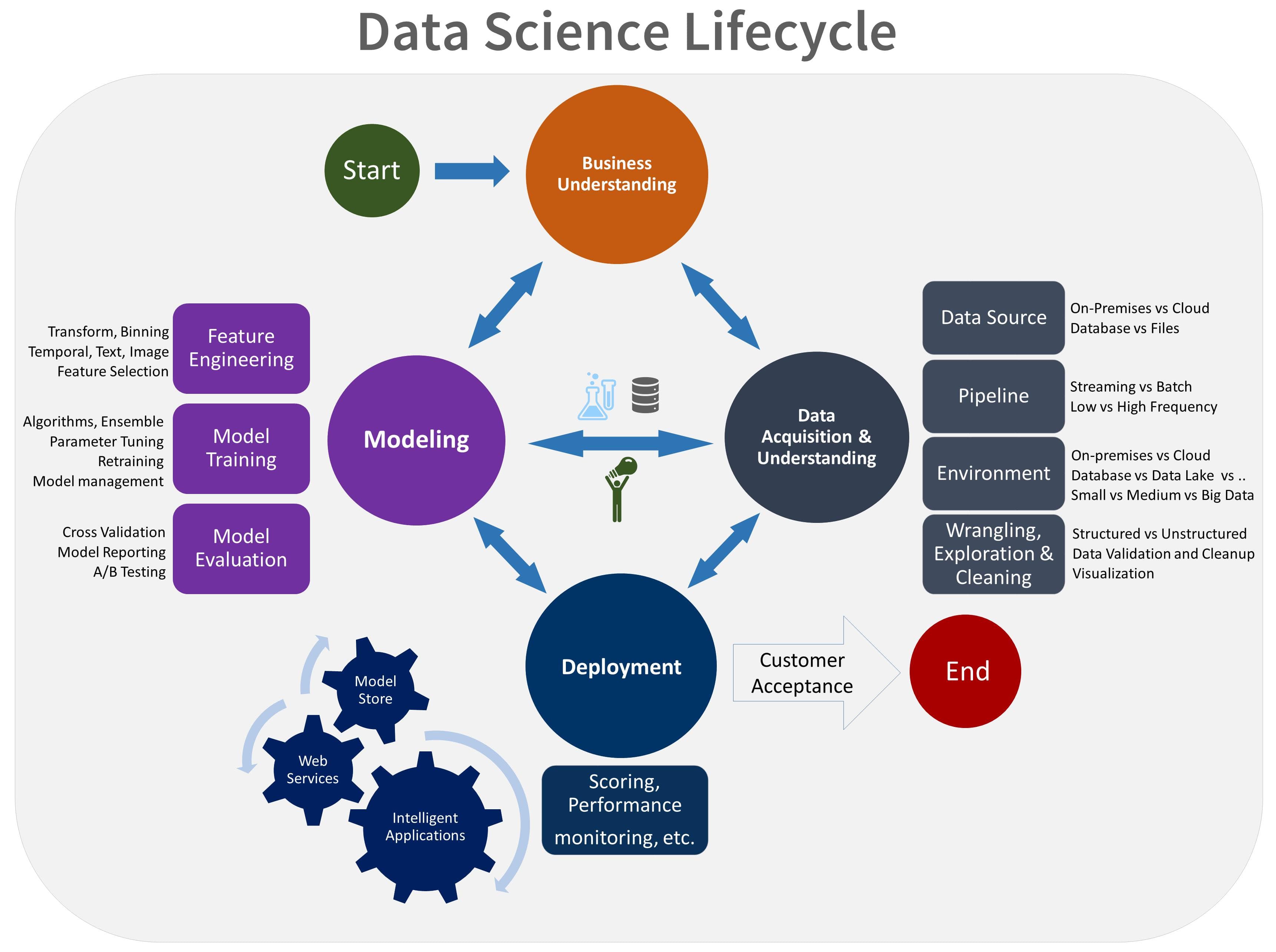
End-to-End Data Science Project Lifecycle: A Comprehensive Guide
In the rapidly evolving field of data science, understanding the full lifecycle of a data science project is crucial for both beginners and experienced practitioners. This guide walks you through the various stages, providing insights and practical examples.
1. Problem Definition (Business Understanding)
Every successful data science project begins with a clear understanding of the problem to solve. This involves engaging with stakeholders to define objectives and the desired outcomes.
- Identify the business problem
- Determine key performance indicators (KPIs)
- Gather stakeholder requirements
2. Data Collection
Once the problem is defined, the next step is to gather the necessary data. This can involve:
- Utilizing APIs to fetch real-time data
- Accessing public datasets or purchasing proprietary data
- Conducting surveys or experiments
3. Data Cleaning & Preprocessing
Raw data is often messy and requires significant cleaning and preprocessing. This stage may include:
- Handling missing values
- Removing duplicates
- Normalizing data formats
4. Feature Engineering
Creating meaningful features from raw data can significantly enhance model performance. Techniques include:
- Encoding categorical variables
- Creating interaction features
- Scaling numerical features
5. Model Training & Evaluation
With clean and engineered data, you can now train your models. Consider the following:
- Select appropriate algorithms (e.g., regression, classification)
- Split data into training and testing sets
- Evaluate model performance using metrics like accuracy, precision, and recall
6. Deployment (Flask / FastAPI)
Finally, deploying your model allows others to use it. You can deploy models using:
- Flask for simple applications
- FastAPI for more complex needs
- Docker for containerization
Code Example
from flask import Flask, request, jsonify

app = Flask(__name__)

@app.route('/predict', methods=['POST'])
def predict():
    data = request.get_json(force=True)
    prediction = model.predict(data['input'])
    return jsonify(prediction.tolist())

if __name__ == '__main__':
    app.run(debug=True)
Challenges
Throughout the data science project lifecycle, you may encounter several challenges, including:
- Data quality issues
- Model overfitting
- Integration complexities
Conclusion
Understanding the end-to-end data science project lifecycle is essential for successful project execution. By mastering each phase, you can enhance your data science skills and increase the likelihood of project success.
Ready to dive deeper? Check our other articles on related topics!
Highlights
- •Understand the critical phases of a data science project.
- •Learn practical steps for each stage of the lifecycle.
- •Gain insights into deployment techniques to bring models to production.
Need similar implementation support?
Work with our engineering team on scalable web apps, backend architecture, and growth-ready product delivery.
Related Content
Keep reading similar insights
General
How to Build a File Upload System Using Multer and Node.js
Learn how to create a robust file upload system with Multer and Node.js. This guide covers everything from installation to error handling.
General
Redis Caching Explained for Beginners
Discover how Redis can enhance your application's performance through effective caching. This guide covers installation, integration, and strategies for optimal use.
General
Mastering Git and GitHub Workflow for Team Projects
Learn how to efficiently manage team projects using Git and GitHub. This guide covers everything from initializing repositories to best practices for collaboration.